With the demand for precast concrete projected to grow 6.6% by 2027, many businesses are using this construction material to achieve better results. From its superior strength to its ability to save time and money, there are many reasons why your company could benefit from using precast concrete in your next project.
This article provides a comprehensive guide to precast concrete, helping you to maximize its benefits.
Precast concrete is any concrete that you cast off-site or away from the final installation location. Unlike regular concrete, precast concrete comes ready to assemble on-site.
Since the Roman era, there has been some form of precast concrete, and it was first used in modern construction for prefabricated panels by Scottish engineer John Alexander Brodie in 1903. This material has been developed and refined over time to enhance its performance and strength, including reinforcement through bars and fibers.
Manufacturers make precast concrete in specialized plants with molds to produce construction components to the specifications you need. Here’s the process in more detail:
First, you need to lay the foundations for the precast concrete components. Then the individual components are transported onto the site. Cranes are required to help position the pieces. You can connect concrete components through steel connectors, which bolt the pieces together. Alternatively, you can join them by grouting or concreting.
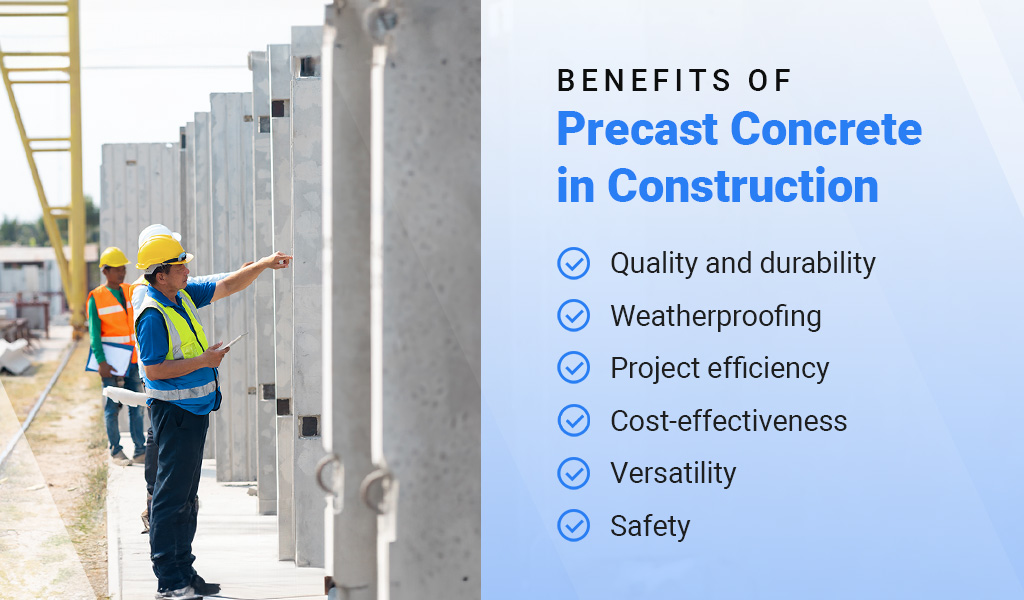
There are many benefits to using precast concrete in construction, including:
Like traditional rebar or wire mesh, fiber reinforcement is another way to strengthen precast concrete. Synthetic fibers can be added to the concrete mix to further enhance its durability and reduce the likelihood of cracking.
For some applications, placing steel rebar in tight edges can be challenging to achieve the right finish, which is where synthetic reinforcement fibers can provide the necessary structural integrity and impact resistance. The fibers are distributed throughout the mix to give 3D reinforcement. This helps with controlling temperature shrinkage. You can use a range of fiber lengths, diameters, and configurations from fibrillated to monofilament forms to ensure the proper reinforcement for your specifications.
The strength of precast concrete with fiber reinforcement can also save you labor costs and time, as wire mesh is often not needed on the sidewalls or base of your component.
There is a range of projects where you can use precast concrete, from burial vaults to septic tanks or even sculptures. Precast concrete reinforced by fibers is typically used where cracking is common or when extra durability is needed. Its toughness means it works well as industrial flooring or even for busy highways and tunnels.
Bridge decks and overlays are often made using precast concrete reinforced with synthetic fibers to handle the unique mechanical and environmental stresses over a longer service life. This reduces maintenance costs and minimizes downtime.
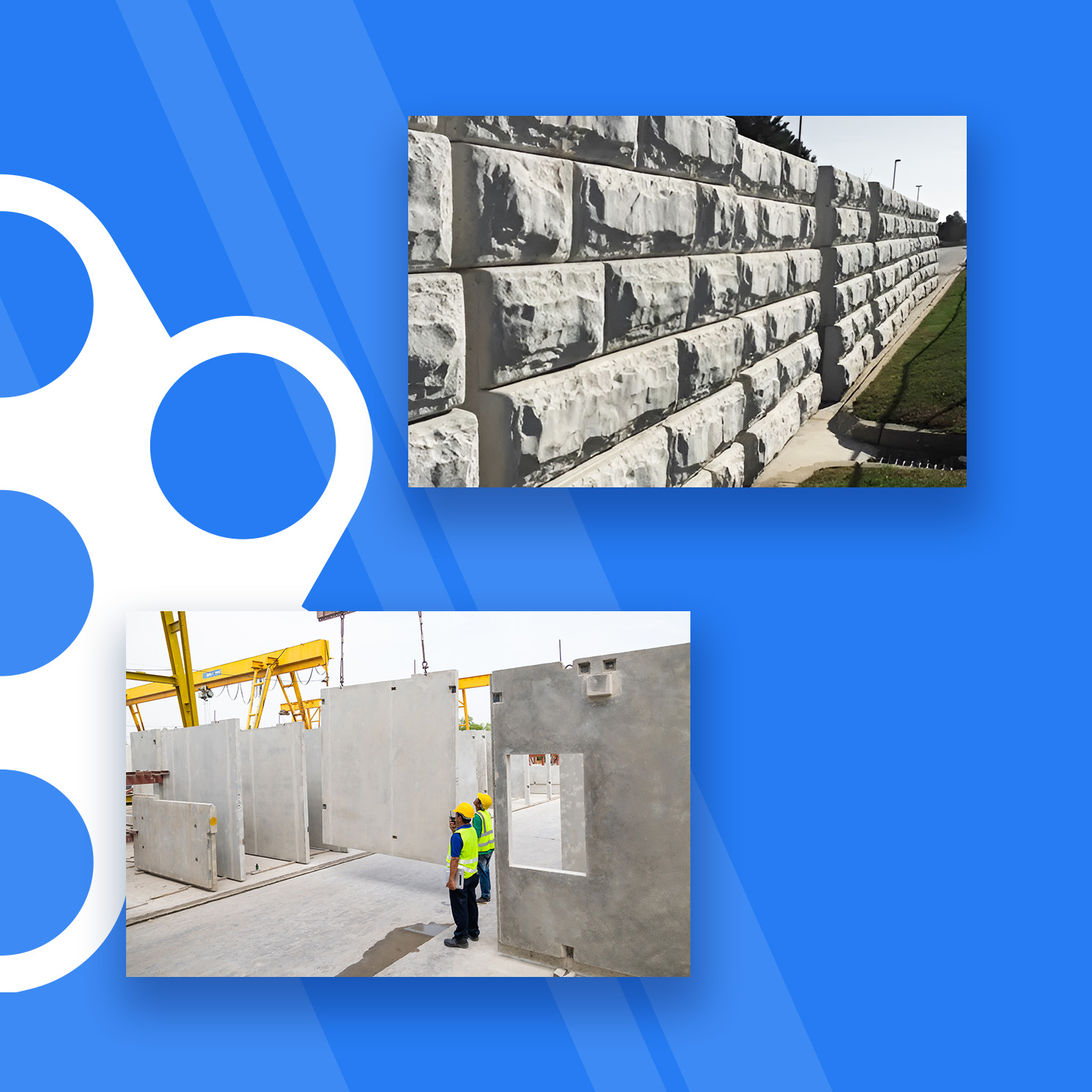
The structural properties of precast concrete also make it suitable for wall construction. Compound walls can be made to the right strength and in a variety of textures and finishes using precast concrete. These walls are also quick to install.
Several innovations are emerging that could further enhance the efficiency of precast concrete and add additional features. This includes the use of 3D printing to create reusable molds straight from digital files. This enables a more efficient process and reduces labor through automation.
Smart concrete incorporates technology into precast concrete slabs and components. One example is in roadways, where technicians seamlessly embed sensors and wireless chargers into precast concrete infrastructure.
As the construction industry seeks to maintain sustainable practices, precast concrete is proving to be an eco-friendly alternative to other materials. Many manufacturers are using environmental product declarations (EPDs) to measure the impact of various precast concrete products throughout their life cycle. Some reinforced precast concrete products even use recycled polypropylene fibers to repurpose waste products.
By unlocking the potential of precast concrete, you can use its superior durability to your advantage. Choose a high-quality precast concrete product to find the most sustainable option for optimized development. FORTA is a global leader in reinforcement fiber products, including macro synthetic fibers and micro fibrillated fibers to suit your needs.
To learn more about how our products can enhance your next project, contact us to get in touch with our engineers.