

On its own, concrete is imperfect – it lacks flexural and tensile strength. To overcome these failures, we include reinforcement.
Rebar is known by pretty much everyone in the construction industry who has ever used concrete, even though its imperfections are widely known. (It’s big. It’s rusty. It allows concrete to crack. It’s time-consuming and requires manpower that in today’s construction industry simply doesn’t exist without frustrations.)
Fiber reinforcement was invented as an alternative to rebar, and although fiber does have some benefits, many types of fibers (like those made of cheaply made plastic) are deeply flawed. The biggest flaw is that plastic fibers first need to stretch and allow concrete cracks to form before they resist concrete crack widening. Steel fibers can increase the strength of concrete somewhat, but like a nail in wood, they have difficulty gripping concrete and will slip under even moderate stress.
There’s a better alternative to fiber.
Yes, it’s small. Yes, it is made with steel, which some fibers also have. But apart from these similarities, there are many differences that make Helix Micro Rebar unlike any other.
Look at an older overpass and you will see chunks of concrete missing. That’s because standard reinforcing steel leads to cracks and corrosion, which is the leading cause of concrete deterioration in bridge deck slabs. Helix Micro Rebar has a patented twist in its design, bonding to concrete, unlike rebar and fibers.
Few rebar alternatives can be used in as many applications as Helix Micro Rebar. Whether you are pouring a million-square-foot concrete slab, tilt-up panels, ICF homes, footings, high-performance applications, roads, precast vaults or tunnels, this tiny alternative reinforcement is able to solve challenges in them all.
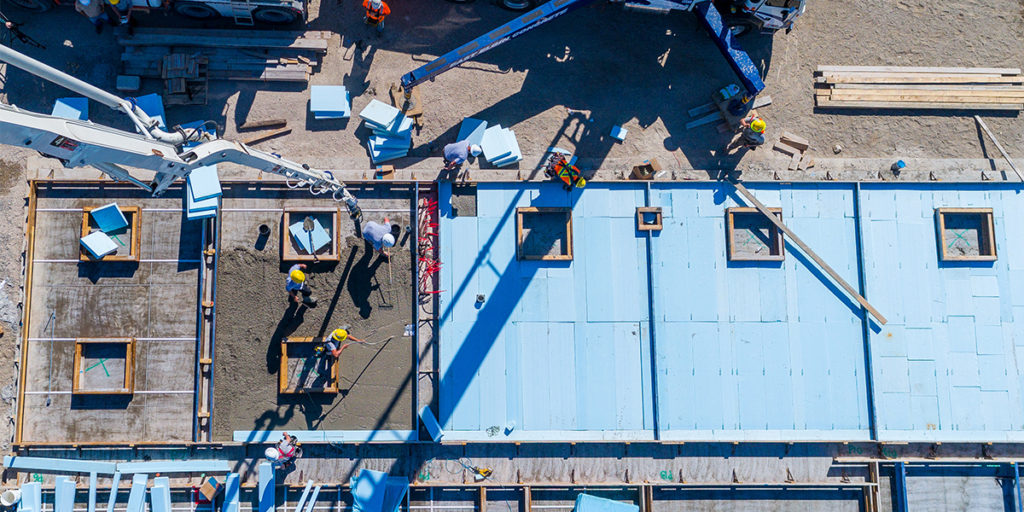
Helix Steel’s micro-sized reinforcement is approved for use:
There are limitations to using Helix Micro Rebar, but they are far fewer than fibers and often they can be minimized through effective engineering.
Helix Micro Rebar is made from 100% steel, which is 600% stiffer than concrete. Independent studies conclude that steel fibers do not have pre-crack performance like Helix Micro Rebar does, since Helix Micro Rebar has a patented twist design.
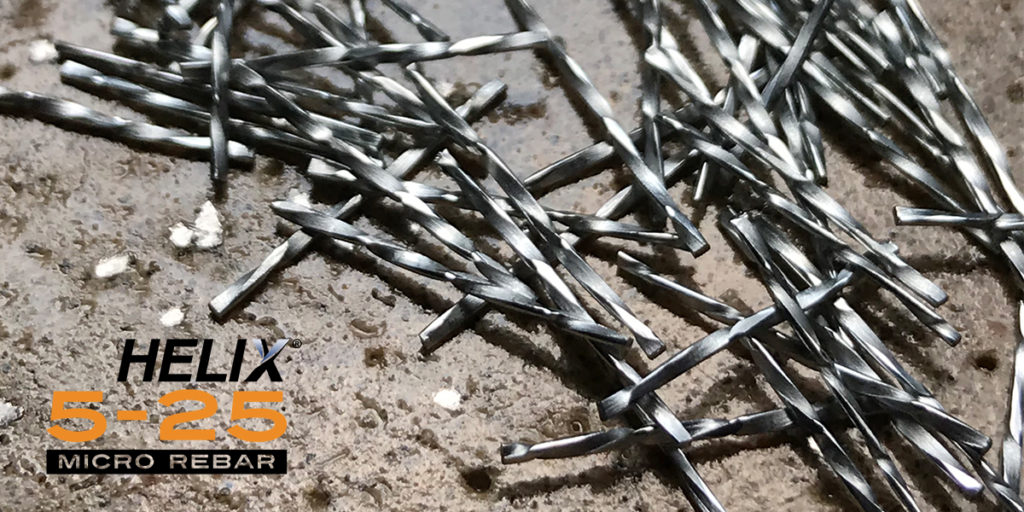
Helix Micro Rebar requires smaller doses than fiber and much less steel than rebar or mesh. For example, for a cubic yard of concrete, a typical Helix Micro Rebar dose would be 18 lbs. (8 kg.), while other fibers would be up to 60 lbs. (27 kg.) It is often applied at 1:3 to 1:4 the dosage of other steel fibers.
Concrete shouldn’t have to crack for its reinforcement to begin working, but that’s how many fibers are designed to operate. Polymer and steel fiber manufacturers recognize the low modulus of their concrete reinforcement. To justify the properties they rely on test standards that measure performance only after large cracks have formed, which is ironically when they exhibit better performance. These methods include ASTM C1399 and ASTM C1609.
Helix Steel has American engineers that are ready to help you with your project.
Choosing Helix Micro Rebar for your next project will change the way you build with concrete. If you have questions about using rebar alternatives, we are always here to help. Contact Helix Steel today.

