


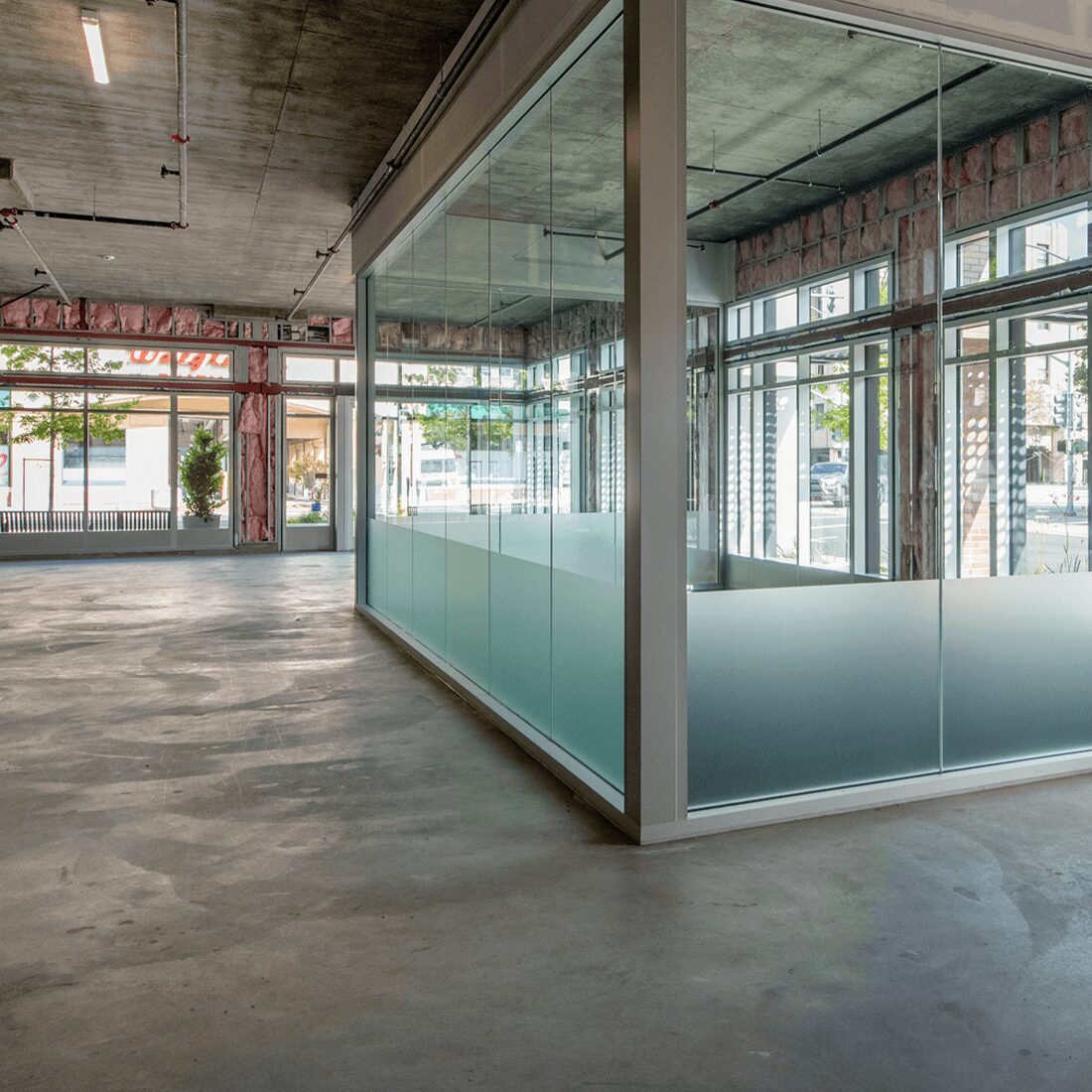
Retail construction projects demand speed, durability, and long-term value. Traditional steel reinforcement is often a hindrance — labor-intensive placement, extended timelines, and ongoing maintenance costs from corrosion and cracking erode profits and create headaches for years after the ribbon-cutting ceremony.
Fiber-reinforced concrete is a proven alternative that addresses these challenges head-on. Choosing this engineered solution gives you faster installation and reduced life cycle maintenance costs. You also get the structural integrity needed to support high-traffic retail environments while maintaining the clean, professional appearance your tenants and customers expect.
Standard concrete often struggles to meet retail construction’s performance requirements. Constant foot traffic requires smooth, crack-free surfaces, while commercial parking lot concrete must withstand vehicle loads, freeze-thaw cycles, and deicing chemicals. Distribution center floors take a hammering from forklift traffic and heavy pallet loads throughout the day.
These high-visibility applications necessitate reinforcement that prevents early-age cracking and maintains long-term performance without compromising aesthetics or extending construction timelines.

Fiber-reinforced concrete addresses immediate construction concerns while improving maintenance and commercial concrete durability. Fibers incorporated throughout the concrete provide continuous internal reinforcement that improves performance from the moment of placement through decades of service life.
Mixing fibers into concrete eliminates the separate step of placing and tying steel reinforcement. This streamlined process accelerates construction timelines by removing a labor-intensive bottleneck from the critical path. Instead of working around rebar, crews focus on concrete placement, which improves productivity and jobsite safety.
This efficiency translates to cost savings. Fiber reinforcement requires less placement time and labor compared to traditional steel methods. For developers managing tight construction schedules, this speed advantage can mean the difference between opening on time or incurring costly delays that impact lease agreements and tenant move-ins.
Fiber reinforcement provides critical tensile resistance during curing. The fibers deliver tensile strength when concrete is most vulnerable to cracking from rapid moisture loss and temperature changes. This early intervention prevents microcracks from propagating and widening over time.
For retail floor reinforcement solutions, crack control impacts aesthetics and functionality. Smooth, crack-free surfaces maintain the professional appearance retail tenants expect while eliminating trip hazards and surface irregularities that interfere with cart traffic.
The superior finish quality reduces callbacks and tenant complaints, protecting your property’s reputation and minimizing maintenance disruptions.
While daily wear degrades traditional slabs, fiber reinforcement enhances concrete’s resilience. The fiber network resists fatigue, allowing the concrete to withstand repeated loading cycles without deterioration. Impact resistance increases, reducing the risk of damage from dropped objects or equipment strikes common in retail environments.
Commercial concrete longevity, shear and abrasion resistance improve significantly due to fibers. This protection extends the functional service life of floors, parking structures, and pavements, delaying the need for expensive resurfacing or replacement.
Replacing traditional steel with reinforcement fibers reduces the environmental footprint of commercial construction projects. Steel production incurs significant carbon costs, and corrosion-related failures in steel-reinforced concrete generate waste when damaged sections require demolition and replacement. Fiber reinforcement simultaneously addresses these issues.
Extending concrete service life through improved durability is one of the most effective sustainability strategies available to developers. Research confirms that fiber reinforcement improves the environmental profile by reducing reliance on steel and minimizing maintenance interventions over the structure’s lifetime.
For projects pursuing green building certifications or corporate sustainability goals, fiber-reinforced concrete has quantifiable environmental benefits.
Engineered fiber solutions adapt to applications across the retail building envelope, from interior floors to exterior pavements. Understanding where fiber reinforcement delivers maximum value helps developers and contractors optimize specifications for each project component.
Slab-on-ground applications in retail spaces and attached distribution centers benefit significantly from macro synthetic fiber reinforcement. These fibers improve impact resistance for floors that see heavy equipment traffic while controlling shrinkage that would otherwise create unsightly cracks.
Commercial concrete flooring solutions with fiber reinforcement distribute evenly throughout the slab thickness, delivering consistent strength and crack control that steel mesh can’t match.
Large retail footprints amplify the efficiency advantages. Eliminating traditional steel placement saves contractors considerable time and labor across thousands of square feet.
Exterior applications experience additional challenges due to freeze-thaw cycles, deicing chemicals, and heavy vehicle loads.
Commercial building maintenance reduction is essential for preserving functionality and appearance as concrete faces harsh conditions. Fiber reinforcement shields slabs from thermal cycling and chemical exposure, preventing accelerated deterioration.
Traditional fiber-reinforced concrete pavement demonstrates superior performance in parking lots and access roads where appearance and endurance impact property value. The fiber reinforcement extends pavement life while reducing repair frequency.
Structural elements require the assurance that structural integrity will remain intact throughout the building’s service life. Fiber-reinforced concrete solutions support reliable foundation performance across soil conditions and loading scenarios, providing the same crack control and integrity that make fibers valuable in visible applications.
Initial material costs tell only part of the story when evaluating reinforcement options. The true measure of value emerges from life cycle cost analysis that accounts for installation speed, maintenance frequency, and service life extension. Fiber-reinforced concrete consistently outperforms traditional steel reinforcement across all three dimensions.
Preventing early deterioration eliminates the costly repair cycles that plague steel-reinforced structures. When concrete doesn’t crack and spall, maintenance teams can reallocate resources to other priorities instead of fielding ongoing emergency repairs and tenant complaints. The extended service life means developers can delay major capital expenditures for pavement replacement or slab restoration, improving commercial property life cycle costs and cash flow.
For commercial properties where appearance and functionality directly impact tenant satisfaction and property values, fiber reinforcement’s superior performance justifies incremental material cost when you consider the total price of ownership over decades of service.
Fiber-reinforced concrete for retail spaces delivers measurable advantages for commercial projects — faster installation timelines, reduced labor costs, superior crack control, and long-term durability that minimizes maintenance interventions. The life cycle cost analysis consistently favors fiber-reinforced concrete over traditional steel reinforcement, making it the financially sound choice for developers and contractors focused on maximizing ROI.
FORTA is the premier solutions provider to the construction industry, backed by an extensive engineering division that designs comprehensive solutions. Our team specializes in converting existing rebar designs to fiber reinforcement and optimizing your current specs and plans.
Whether you are breaking ground on a new retail development or looking to improve project performance, we deliver the proven expertise you need to confidently specify fiber reinforcement across every application.
Contact us to learn how our fiber-reinforced concrete solutions can reduce costs and extend the service life of your next commercial project.


